
Microcement Floors Tallai: A Practical Guide for Hinterland Homes
What to know before putting microcement floors in a Tallai home: slab checks, prep, multi-coat application, sealing and care.
Microcement Floors Tallai: A Practical Guide for Hinterland Homes
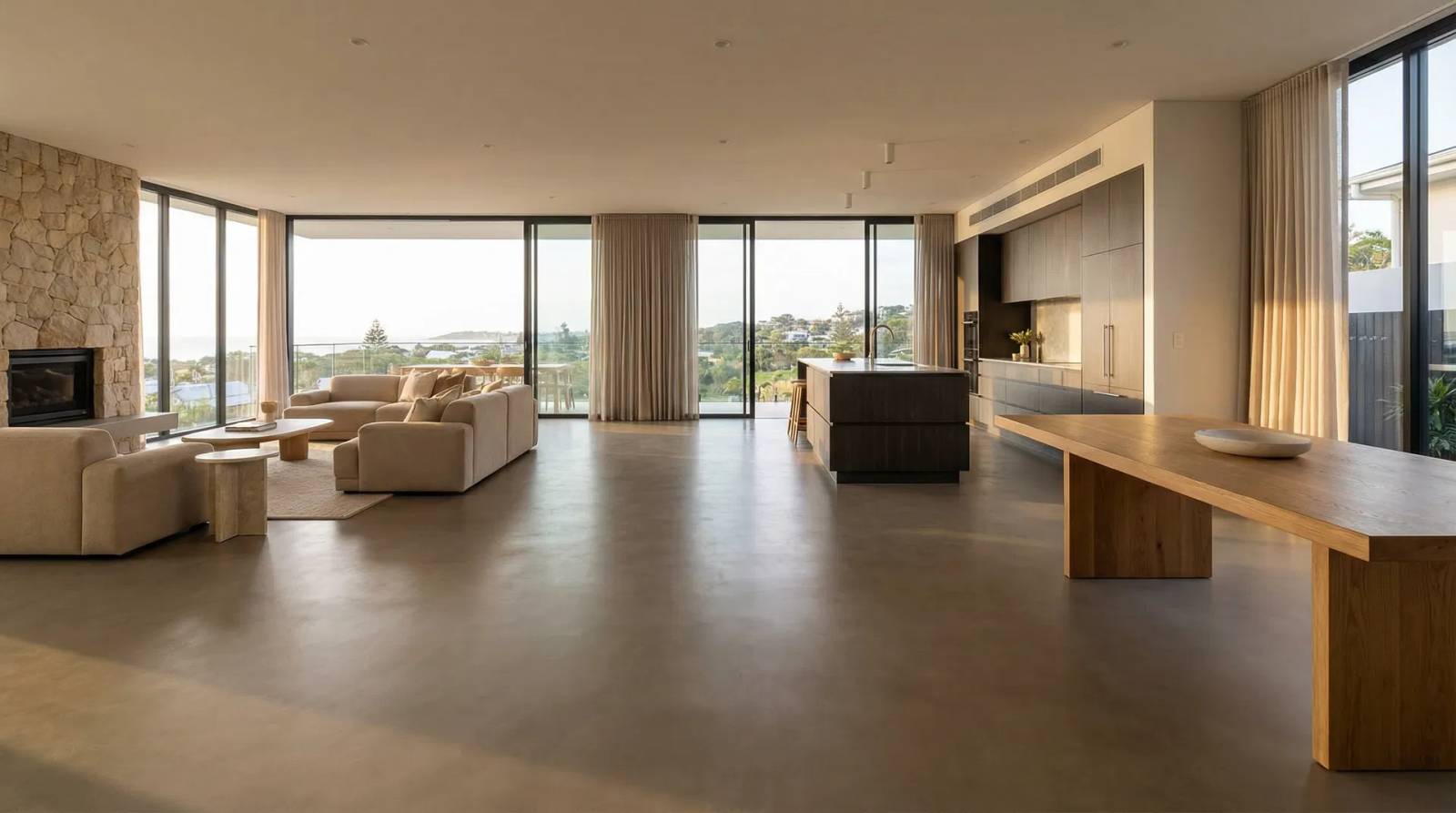
If you own a home in Tallai and you are tired of tiles, grout lines and cold, patchy concrete, microcement floors are worth a proper look. Tallai sits in the Gold Coast hinterland, with acreage blocks, large family homes and plenty of indoor to outdoor living. Those homes tend to have big, open floor areas, and that is where a seamless finish earns its keep.
This guide covers what microcement is on a floor, what we check before starting, how the job runs, and how to look after it.
What microcement is on a floor
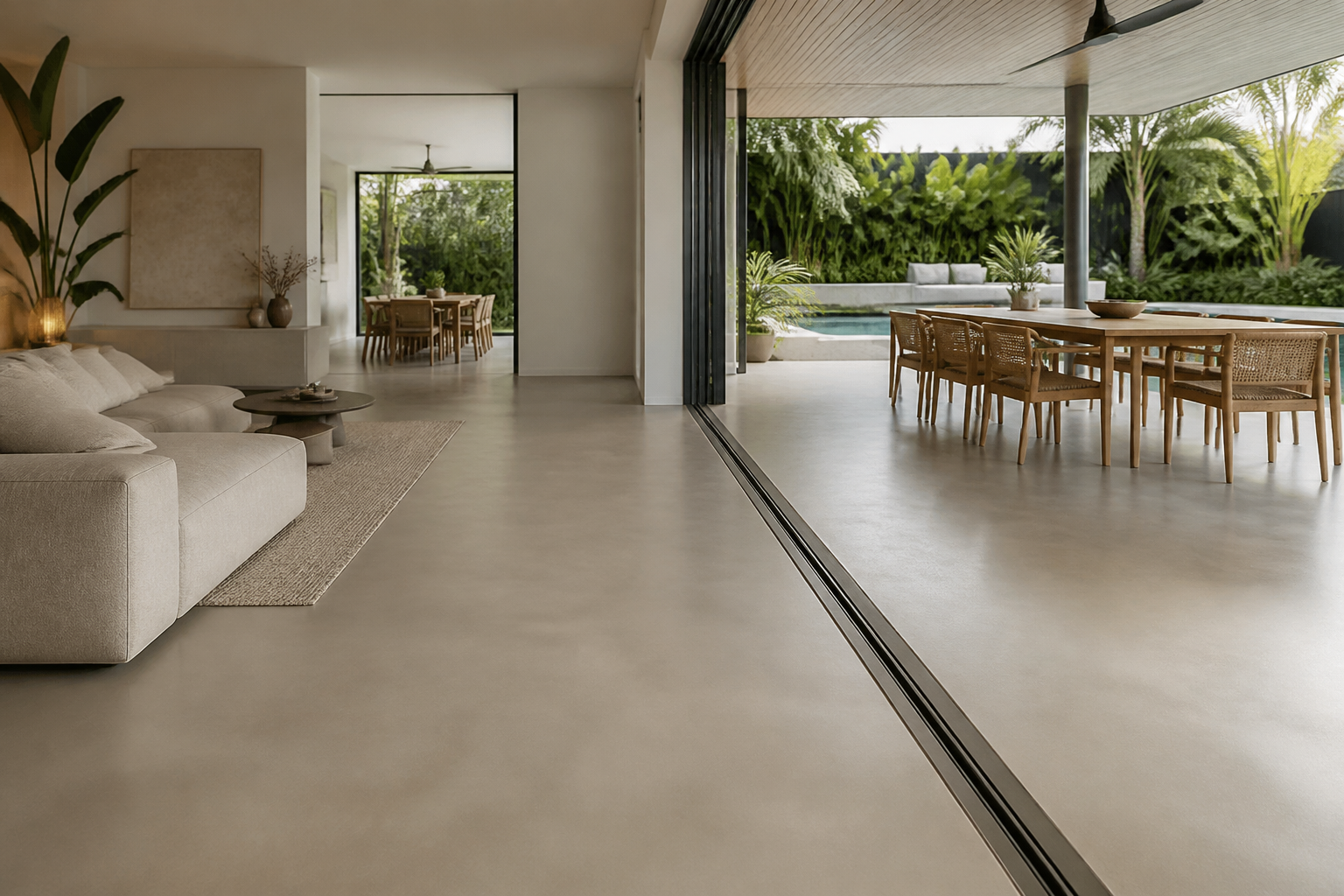 Illustration, not a photo of an MCK job.
Microcement is a decorative cement-based finish applied by hand in thin coats. It goes on 3 to 5mm thick and it is seamless, so there are no grout lines and no joins. You get one continuous surface from room to room, which suits open living areas, hallways and kitchens.
It is a finish, not a structural layer. It relies on the floor underneath being sound. That is why most of our work happens before the first coat goes on.
If you want the basics first, read What Is Microcement? The Complete Guide for Australian Homeowners.
Why it suits Tallai homes
A lot of homes around here are either larger renovation projects or newer builds on generous blocks. Both suit microcement for different reasons.
- Renovations: Old tiles can often be assessed for a new finish over the top, or removed to expose the slab. Either way, we check the substrate first and tell you what is needed.
- New builds: A new slab can be prepared and finished as part of the build, so the floor matches the rest of the design.
- Indoor to outdoor flow: The same look can run from the living room to a covered entertaining area, with the right sealer for each space.
- Climate: Hinterland humidity and summer storms mean floors cop mud, moisture and heat. A properly sealed floor handles that better than a poorly finished one.
For how this plays out across the region, see Why Microcement Floors Are Defining Luxury Homes on the Gold Coast.
How we do it: the four steps
1. Substrate assessment
Before any coat goes on, we check moisture, surface condition and structural integrity. A damp slab, a cracked section or a loose old tile will all cause trouble later. We would rather find it on day one than have you find it a year in.
2. Surface preparation
This means grinding, priming and levelling. Substrate faults telegraph through the finish, so a floor that is not flat and clean will show it. This step is not glamorous, but it decides how the floor looks and how long it lasts.
3. Multi-coat application
The application takes a minimum of 3 days. We hand-apply multiple coats, and each one cures before the next goes on. Rushing the curing is how floors fail, so we do not do it. Expect people and furniture to stay off the area while this runs.
4. Sealing
The sealer is chosen for the job. Floors get a traffic-grade system. Outdoor areas get UV protection. Wet areas get a wet-area sealer over the membrane installed before the finish. Microcement itself is a decorative finish and is not the membrane.
Systems we use
We apply Ideal Work Microtopping and Solidro microcement systems. Ideal Work is an Italian maker, and the systems are supplied in Australia through Hychem Architectural. For floors, these are the systems we are talking about. Sto's Stolit Milano is a fine decorative wall finish that we also apply, but it is not microcement and it is not for floors.
Where it works in the home
- Open plan living and dining
- Kitchens, which we cover in Microcement Kitchen Floors: Durability Meets Design on the Gold Coast
- Hallways and bedrooms
- Laundries and bathrooms, over a wet-area membrane
- Covered outdoor entertaining areas and pool surrounds, with UV-protected sealing
- Stairs and other architectural features
The same finish can carry through all of it, which is the main appeal. One floor, no breaks.
Looking after your floor
Care is simple, but there are rules.
- Clean with a pH-neutral cleaner.
- Avoid bleach, ammonia and acidic cleaners.
- Skip abrasive pads and steam cleaners.
- High-traffic floors are resealed every 2 to 3 years.
With a rural-style block, expect grit and dirt tracked inside. A good doormat and regular sweeping save the sealer from wearing early.
Every application we do carries a 7 year warranty.
Questions we get asked
Can you put microcement over my existing tiles? Sometimes. It depends on the condition of the tiles and the slab beneath. We assess it during the substrate check and tell you straight whether it can stay or needs to come out.
How long does a floor take? A minimum of 3 days of application, plus prep before and curing between coats. The size of the area and the condition of the substrate change the total.
Is microcement slippery? The sealer choice affects grip. We select a traffic-grade system for floors and a suitable system for wet and outdoor areas. Tell us where the floor is going and we will match it.
What does it cost? It depends on area, prep and finish. Use the instant estimate for an approximate range. The final price is confirmed after a site measure.
Next steps
If you are planning microcement floors in Tallai, get an approximate range in about 2 minutes with the instant estimate tool. If you have photos and plans, send them through the project enquiry form and we will take it from there. You can also see how a full job unfolds in What a Microcement Renovation Actually Looks Like.