
Microcement Floors Broadbeach: What to Know Before You Start
A plain guide to microcement floors in Broadbeach: slab checks, prep, coats, sealing and care for apartments and houses near the coast.
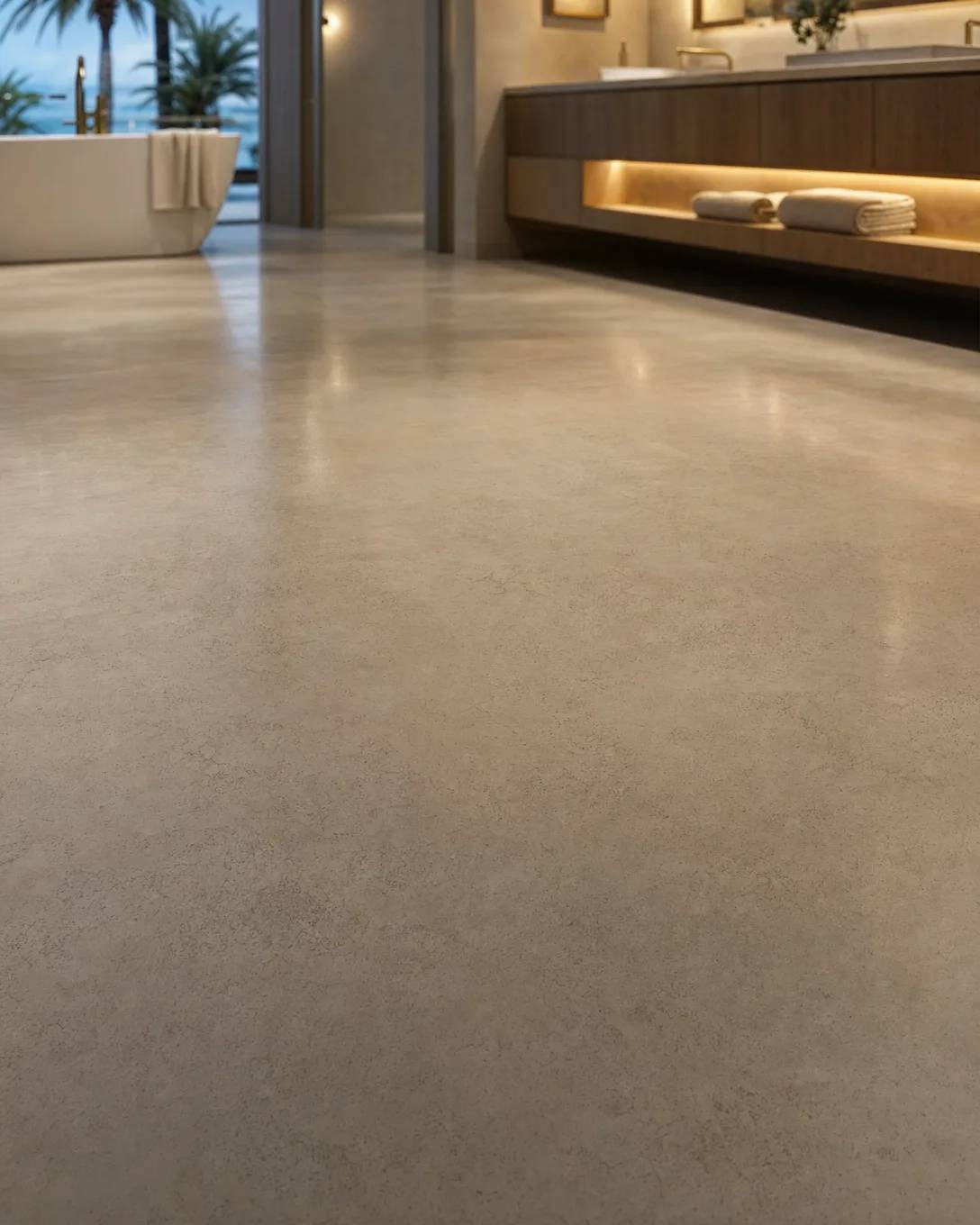
Microcement Floors Broadbeach: What to Know Before You Start
If you are looking at microcement floors in Broadbeach, you are probably dealing with one of two things. Either you have old tiles with tired grout, or you are finishing a new build or renovation and want one continuous floor. Microcement suits both. It goes on 3 to 5mm thick, it is seamless, and it has no grout lines or joins to collect sand and dirt.
This guide covers how the job runs, what the floor needs underneath, and what to expect once it is down. We are Micro Cement King, a microcement applicator on the Gold Coast, and we work across South-East Queensland and Northern NSW.
Why microcement works for floors near the coast
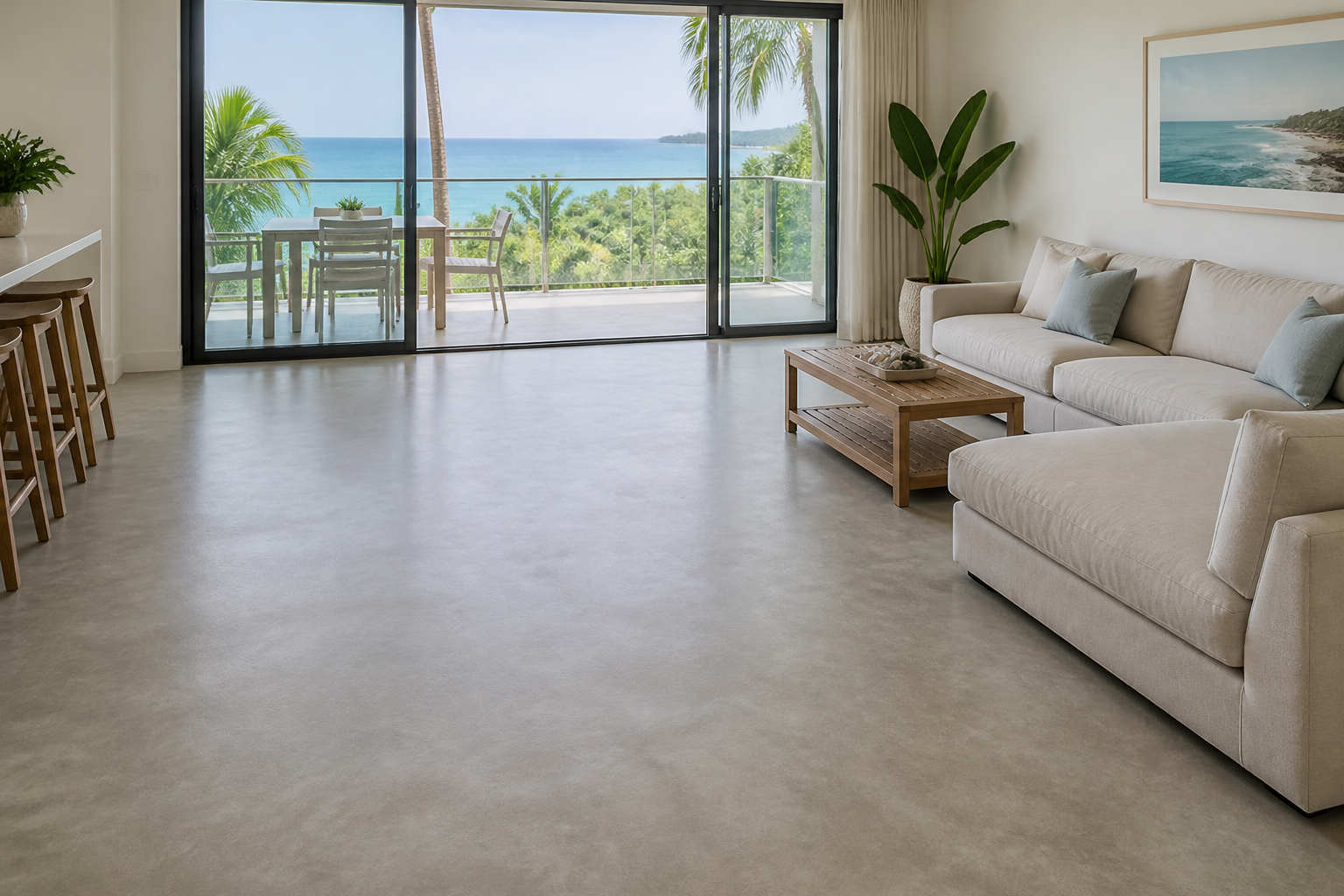 Illustration, not a photo of an MCK job.
Broadbeach is close to the beach, so sand and salt air come inside. Humidity is high for much of the year. Floors here get walked on with wet feet, sandy feet and the occasional dragged outdoor chair.
Tiles handle this, but the grout is the weak point. It stains, it grows grime in damp spots, and it is a pain to scrub. Microcement has no grout. You wipe it, mop it and move on.
The other draw is the look. A continuous floor makes a room feel larger, which matters in apartments and compact living areas. It can run from the living room through to a balcony or patio, with the right sealer for each zone, so the whole space reads as one.
Can it go over existing tiles?
Often, yes, but it depends on the substrate. Tiles that are firm, flat and well bonded can usually be prepared and coated. Loose, drummy or cracked tiles need to be dealt with first. We check this at the start, not halfway through.
Grout lines are filled and levelled during prep. If they are skipped, they show through the finish. Substrate faults telegraph through microcement, so the floor is only as good as what is under it.
For a deeper look at the trade-offs, read Microcement vs Tiles: Which Is Right for Your Project?.
How we do a floor: the four steps
Every floor follows the same process. You can see the full version on our process page.
1. Substrate assessment. Before any coat goes on, we check moisture, surface condition and structural integrity. A slab with moisture problems or movement will cause trouble later, so we want to know now.
2. Surface preparation. This is grinding, priming and levelling. It is the least glamorous part and the most important. Highs are ground back, lows are filled, cracks are dealt with, and the primer gives the first coat something to grip.
3. Multi-coat application. Microcement is applied by hand in multiple coats. Each coat cures before the next goes on. The application takes a minimum of 3 days, and larger or more complex floors take longer. You cannot rush the curing between coats and get a good result.
4. Sealing. The sealer is chosen for the job. Floors get a traffic-grade system. Outdoor areas get UV protection. Wet areas get a wet-area sealer over the membrane that is installed before the finish.
Systems we use
We apply Ideal Work Microtopping and Solidro microcement systems. Ideal Work is an Italian maker, and the systems are supplied in Australia through Hychem Architectural. We also apply Sto's Stolit Milano, but that is a fine decorative finish for interior and exterior walls. It is a wall finish, not microcement, and it is not for floors.
Our team has more than 10,000 hours of combined application experience, and we built what we describe as Australia's first 100% microcement home. Our largest single project was more than $1.2 million of microcement at Sunset Cove, Robina. Floors are a big part of that kind of work.
Bathrooms, laundries and wet areas
If your floor plan includes a bathroom or laundry, keep one thing straight. Microcement is a decorative finish. In showers and wet areas it goes over a wet-area membrane installed beforehand. The finish itself is not the membrane. A good job needs both, done in the right order.
For more on bathrooms, see Microcement Bathrooms on the Gold Coast: What to Expect.
Apartments and older homes
Many Broadbeach jobs are apartments, so a few practical points apply. Check your building rules for work hours, lift access and any approvals before you book. Dust control and protecting common areas matter too. Ask about these early so there are no surprises.
Older brick homes and renovated houses bring different questions, mostly about slab condition and level. Older slabs can have hairline cracks and dips. These are common and usually manageable, but they should be assessed on site.
Looking after a microcement floor
Care is simple. Clean with a pH-neutral cleaner. Avoid bleach, ammonia, acidic cleaners, abrasive pads and steam cleaners, because they damage the sealer. Sweep sand off regularly, since grit underfoot wears any hard floor over time. Felt pads on furniture legs help.
High-traffic floors are resealed every 2 to 3 years. That keeps the protection up and the surface looking right. Our full guide is here: How to Care for Microcement.
Every application is covered by a 7 year warranty. If you want to know what that covers, we explain it in What Does a Microcement Warranty Actually Cover?.
Questions we get asked
How long does a floor take? A minimum of 3 days of application, because each coat has to cure before the next. Prep comes before that, and the total depends on the size and condition of the floor.
Will the floor crack? Microcement is thin, so it follows the slab. Movement in the substrate can show through. That is why we assess the slab first and prepare it properly. We also tell you straight if a crack is likely to return.
Is it slippery when wet? The sealer choice matters here. We pick a system suited to the area, and we can talk through finish options for wet and outdoor spaces.
How much does it cost? It depends on area, condition and finish. We do not quote from a guess. Use the instant estimate for an approximate range. The final price is confirmed after a site measure.
Next step
If you want a ballpark for microcement floors in your Broadbeach place, try the instant estimate. It takes about 2 minutes and gives an approximate range. If you have photos and plans, send them through the project enquiry form and we will take it from there. You can also call 0468 053 819 Monday to Friday, 7am to 5pm AEST, or email projects@microcementking.au.