
Microcement Bathroom Surfers Paradise: What to Know Before You Start
A straight guide to microcement bathrooms in Surfers Paradise: how the job is done, what to check first, and how to keep the finish looking good in salt air and humidity.
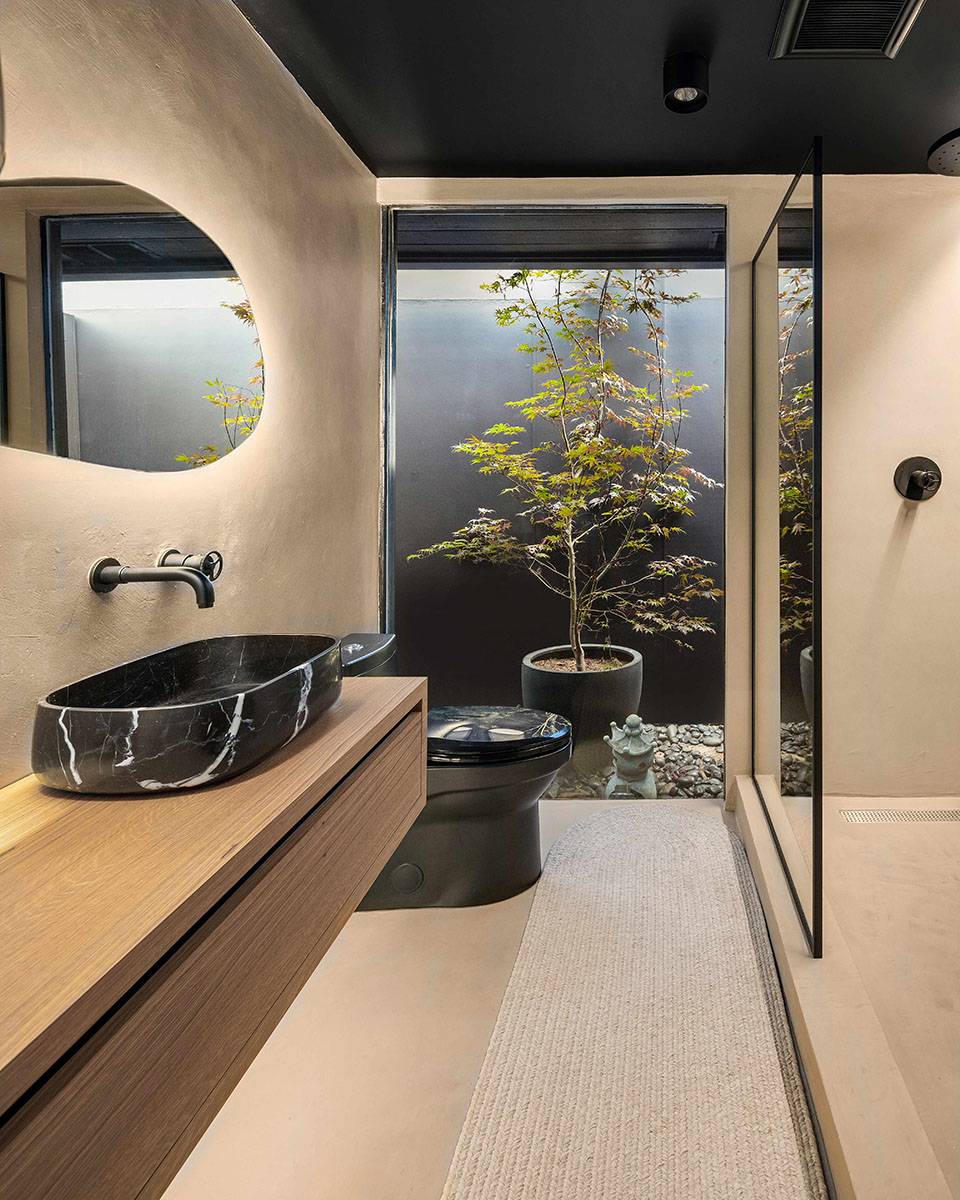
Microcement Bathroom Surfers Paradise: What to Know Before You Start
If you are planning a microcement bathroom in Surfers Paradise, you are probably dealing with one of two things. Either an older bathroom with tired tiles and grout that has gone dark, or a newer one that looks fine but feels cold and busy. Microcement fixes both. It goes on 3 to 5mm thick, it is seamless, and there are no grout lines for mould to settle into.
This post covers how we approach bathrooms, what gets checked before any coat goes on, and what to expect once it is done. For a wider view, see our post on microcement bathrooms on the Gold Coast.
Why bathrooms in Surfers Paradise suit microcement
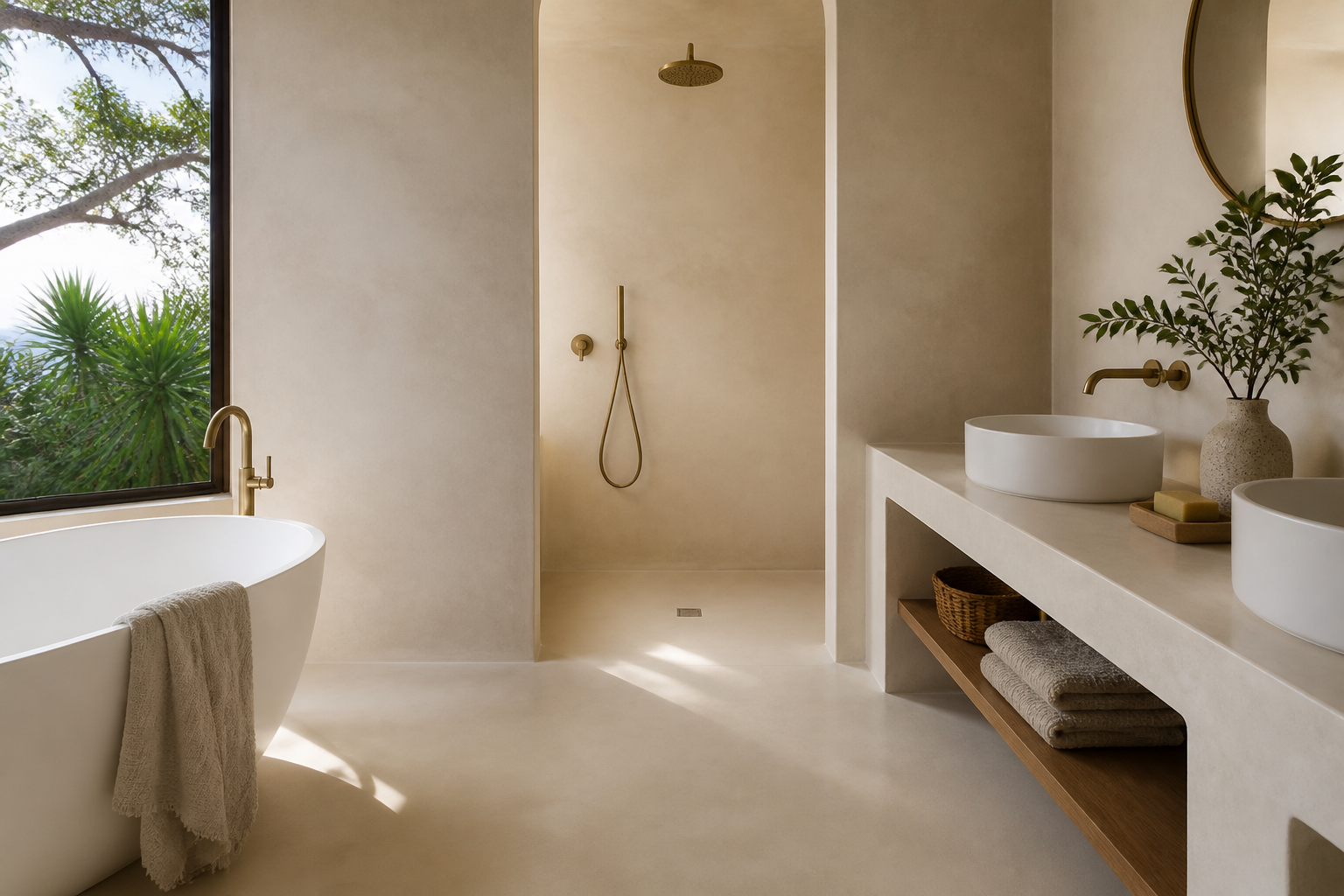 Illustration, not a photo of an MCK job.
Surfers Paradise has a mix of high-rise apartments, older units and homes close to the beach. The conditions are the same across all of them: warm humid air, salt in the atmosphere and bathrooms that get used hard. Grout is the weak point in a tiled bathroom. It stains, it holds moisture and it needs regular attention.
Microcement removes the grout. The shower floor, walls and vanity can all run in the one surface with no joins. That makes the room easier to wipe down and gives a calm, continuous look. In a small apartment bathroom, that continuity makes the space feel larger.
Renovation demand in the area is steady. A lot of owners want to update a bathroom without a full gut and rebuild. That is worth a conversation, because in some cases microcement can go over existing surfaces once they have been assessed and prepared properly. It depends on the condition of what is underneath.
Step 1: substrate assessment
Before any product goes on, we check moisture, surface condition and structural integrity. This is the step people skip when they price on looks alone, and it is where bathroom failures start.
We look for:
- Moisture in the walls or floor that should not be there
- Loose, drummy or cracked surfaces
- Movement in the substrate
- Problems with the existing wet-area membrane
If something is wrong, it gets dealt with first. Microcement is a finish, not a fix for a failing wall. In older buildings this check matters even more, because you do not always know what is behind the surface.
Step 2: surface preparation
Substrate faults telegraph through the finish. A dip in the floor or a ridge at a joint will show in the final surface, especially under bathroom lighting that rakes across the wall.
Preparation means grinding, priming and levelling. It is dusty, slow work and it is the reason a good microcement job looks flat and even. Falls in shower floors also need to be right so water moves to the drain properly.
This stage is not glamorous. It is also the stage that decides whether the job is still looking good years from now.
Step 3: multi-coat application
Bathroom jobs take a minimum of 3 days of application. The microcement is applied by hand in multiple coats, and each coat is cured before the next goes on. Rushing this causes cracking, uneven colour and poor bonding.
Hand application is also what gives the surface its character. Trowel movement leaves soft variation in the finish, so no two bathrooms look identical. If you want a more uniform look, that can be discussed, and our colour selection guide is a good place to start thinking about tone.
Many bathroom projects carry the same material onto the vanity or a bench as well. If that interests you, read about microcement benchtops.
Step 4: sealing for wet areas
The sealer is chosen for the job. In a bathroom or shower, that means a wet-area sealer over the wet-area membrane installed before the finish. Floors that take foot traffic get a traffic-grade system. The sealer is what protects the microcement from water, soap and daily use, so it is not a place to cut corners.
If you have a shower niche, a bench seat or a freestanding bath, each of those gets sealed as part of the same system so there are no weak spots.
Looking after a microcement bathroom
Care is simple, but there are rules:
- Clean with a pH-neutral cleaner
- Avoid bleach, ammonia and acidic cleaners
- Avoid abrasive pads
- Do not use steam cleaners
In a coastal area, rinsing and wiping down regularly stops soap scum and salt residue building up. High-traffic floors are resealed every 2 to 3 years. Our maintenance guide covers the routine in full.
Every application carries a 7 year warranty. For what that does and does not cover, read what a microcement warranty actually covers.
Microcement or tiles in a Surfers Paradise bathroom?
There is no single right answer. Tiles suit some designs and some budgets. Microcement suits owners who want a seamless surface, fewer cleaning headaches and a continuous look from floor to wall. If you are weighing it up, our comparison of microcement vs tiles lays out the trade-offs plainly.
The other consideration is the building. Apartment owners may need to check body corporate requirements for works, noise hours and access before booking a job. That is worth sorting early.
Questions we get asked
Is microcement sealed for wet areas in a shower? Microcement itself is not the membrane. The wet area is sealed with a wet-area sealer over a wet-area membrane installed beforehand, and the substrate is assessed before we start.
Can microcement go over my existing tiles? Sometimes. It depends on the condition of the tiles and what is under them. We assess the surface first and tell you straight if it needs to come off.
How long does a bathroom take? Application takes a minimum of 3 days because each coat has to cure before the next. Preparation and sealing add to that, and the total depends on the size and condition of the room.
Will it stand up to salt air and humidity? With the right sealer and regular pH-neutral cleaning, yes. External areas get UV protection, and wet areas get the wet-area sealer.
Ready to price your bathroom?
Try the instant estimate tool. It takes about 2 minutes and gives an approximate range, with the final price confirmed after a site measure. If you would rather send photos and plans, use the project enquiry form. You can also call 0468 053 819, Monday to Friday 7am to 5pm AEST, or email projects@microcementking.au.